Is the Bartender Flirting or Being Friendly?
On this page (12 sections)
- Is the Bartender Flirting or Being Friendly? Understanding the Context
- The Customer Service Dynamic: Why Warmth Is Part of the Job
- Baseline vs. Attraction: Reading the Shift Environment
- Key Indicators: Is the Bartender Flirting or Being Friendly in Real Time?
- Dialogue Examples: Testing the Vibe at the Bar
- Other Service Settings: Is a Barista Flirting With Me or Just Being Nice?
- Dialogue Examples: Playful Banter in Cafés and Restaurants
- The Low-Risk Approach: How to Leave Your Number Respectfully
- Reading the Response and Chemistry After You Make a Move
- Knowing When to Back Off: Respecting Boundaries Behind the Bar
- Frequently asked questions
- Chemistry Is Created, Not Forced
You sit down at a neighborhood bar on a Thursday night, order a drink, and the person behind the counter gives you a warm smile, remembers your exact cocktail preference from three weeks ago, and drops a witty joke before rushing to tap a beer. In that moment, a natural question pops into your head: is the bartender flirting or being friendly?
It is one of the most common social puzzles adults run into. Service professionals—bartenders, servers, and baristas—are paid to be charismatic, welcoming, and attentive. Distinguishing between exceptional customer service and genuine personal attraction requires looking at patterns of behavior rather than isolated moments of warmth.
Determining whether a bartender is flirting or being friendly comes down to effort that exceeds their job duties. Friendly bartenders give great service, make eye contact, and chat when convenient. Flirting bartenders cross professional baselines: they make extra trips to your stool, initiate non-work topics, seek private connection, and offer contact info outside their shift.
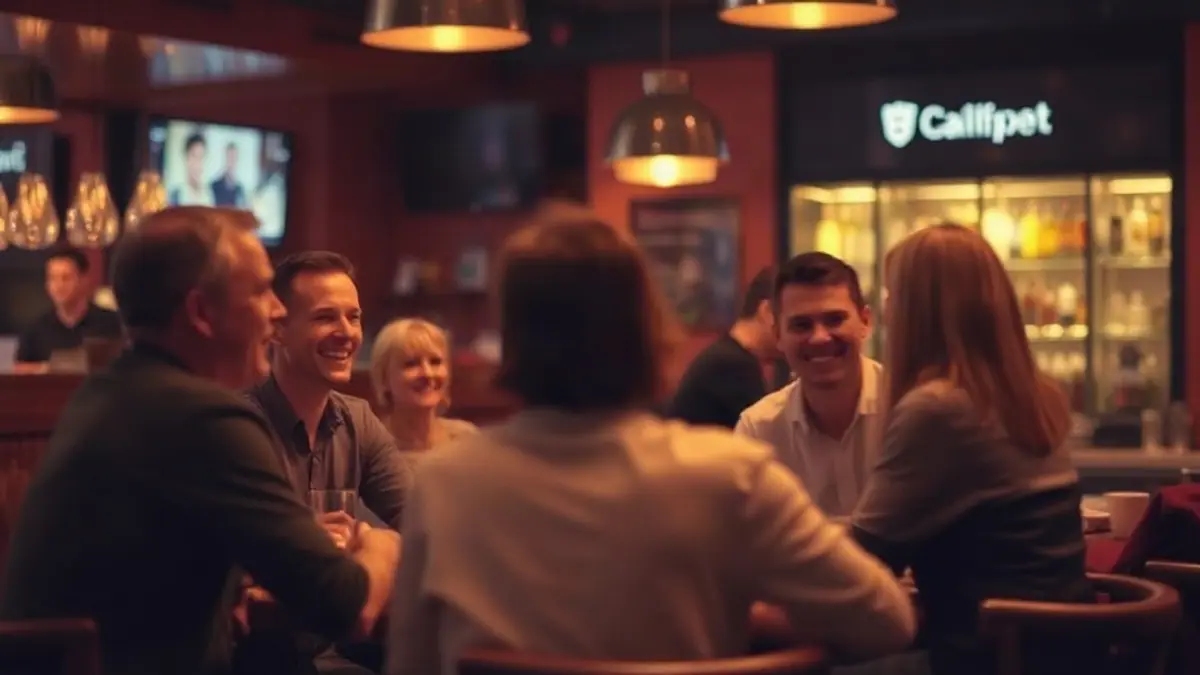
Is the Bartender Flirting or Being Friendly? Understanding the Context
To read the room accurately, you first have to understand the environment. Bars, coffee shops, and restaurants run on hospitality. A great bartender creates an inviting atmosphere where guests feel seen, relaxed, and entertained. Charm is quite literally part of the job description, and tips often scale with how well a staff member connects with patrons.
When you are trying to figure out if someone is interested, mistaking professional charm for romantic interest is a frequent slip-up. If you want to learn how to flirt better, the first lesson is learning to read social context before making an assumption. A bartender who flashes a bright smile, touches your forearm when handing you a napkin, or compliments your jacket might just be excellent at building rapport.
To separate job performance from genuine attraction, you need to look for actions that break the standard transactional routine. A bartender who is simply being friendly keeps their focus split across the whole room. A bartender who is interested will find subtle ways to narrow their focus onto you, even when the room is busy.
If you are unsure whether general interest is brewing, reviewing our comprehensive guide on Flirting vs Friendly: How to Tell the Difference will help you spot the baseline markers of warm social interaction across different settings.
The Customer Service Dynamic: Why Warmth Is Part of the Job
Working behind a bar requires emotional labor. Hospitality workers spend hours managing high-volume crowds, resolving complaints, and keeping energy high. Part of their strategy for managing a room is projecting open, energetic body language. They make quick eye contact, laugh easily, and lean into banter because it keeps the overall vibe pleasant.
This dynamic creates an asymmetry that every customer should respect. You are relaxing with a drink; they are performing on the clock. Because they are on duty, service staff cannot easily walk away from an uncomfortable interaction. They are required to remain pleasant even when a conversation drags on or feels intrusive.
Understanding this balance is not just polite; it is essential for social intelligence. Research on prosocial communication, such as studies compiled by the Greater Good Science Center, shows that humans naturally mirror warmth in cooperative social settings. In a bar, that cooperative setting is built around hospitality. Assuming every smile is a sign of personal interest ignores the professional reality of the space.
When a bartender displays warmth, start by assuming it is genuine professional kindness. Only consider romantic intent if their behavior steps outside standard service duties and stays consistent over multiple interactions.
Baseline vs. Attraction: Reading the Shift Environment
The easiest way to answer whether a bartender is flirting or being friendly is to compare how they treat you versus how they treat the rest of the room. Observing their baseline behavior gives you an objective point of comparison.
If a bartender treats every customer like an old friend, laughing loudly at every joke down the bar top, then warm treatment toward you is simply their standard baseline. However, if they are generally efficient and reserved with others, but spark up and slow down when they reach your seat, you are observing a clear deviation from their baseline.
| Behavior Area | Professional Service Warmth (Baseline) | Genuine Personal Attraction |
|---|---|---|
| Attention & Time | Serves your drink quickly, chats for 30 seconds, and moves on to next customer. | Hangs out near your end of the bar during lulls; returns to your spot without a prompt. |
| Conversation Topics | Keeps topics light: weather, drink choices, sports games on TV, weekend plans. | Asks personal questions: your hobbies, personal life, or where you go after this. |
| Eye Contact & Presence | Scans the room while talking to you to watch for dirty glasses or new guests. | Holds direct, relaxed eye contact; ignores minor room distractions to finish a story. |
| Comped Drinks & Perks | Gives you a buyback beverage because you are a regular or paid for a large round. | Offers a taste of a rare bottle personally, saying “I saved this specifically for you.” |
| Body Language | Stands upright behind the bar, keeping professional physical distance. | Leans over the bar, lowers voice during chatter, or creates moments of direct alignment. |
Pay attention to these shifts in baseline over the course of an hour. Consistency matters far more than one brief moment of eye contact across a crowded room.
Key Indicators: Is the Bartender Flirting or Being Friendly in Real Time?
If you want to spot real attraction behind the bar, focus on voluntary effort. Professional duty dictates that a bartender takes your order, makes your drink, and processes your card. Everything beyond those three actions is voluntary.
Look for these four distinct voluntary signals during your visit:
- They prolong interactions beyond necessity. Instead of dropping off the check and stepping away, they pause to answer a question in detail, share a personal anecdote, or ask for your opinion on a menu change.
- They remember small details from previous visits. Remembering that you drink a mezcal negroni is good customer service. Remembering that your sister was moving to Chicago this weekend and asking how the move went is personal interest.
- They share details about their personal life outside work. If they mention their favorite off-duty spot, music preferences, or weekend hobbies without you pulling the information out of them, they are opening a door for shared connection.
- They drop subtle cues about their schedule. Statements like “I finally get off at midnight” or “I’m off this coming Sunday” are subtle ways people test whether you might ask what they are doing later.
When observing these behaviors, evaluate them as a pattern rather than individual events. To dive deeper into how non-verbal cues function in social environments, read our breakdown of Signs of Attraction: Behavioral Clues and Their Limits.
Dialogue Examples: Testing the Vibe at the Bar
Testing the waters with a bartender requires low-pressure dialogue. The goal is never to put them on the spot while they are working, but to offer a light conversational hook and see if they step through the door.
Here are two scenario frameworks showing how to navigate banter behind the counter.
Situation: You order a drink you haven’t tried before, and the bartender hands it over with a grin.
- Too neutral: “Thanks, looks good.”
- Better: “I’m taking a risk on this one. If it’s terrible, I’m blaming your recommendation.”
- Too much: “You have great taste. You should come over and make these for me at my place tonight.”
- Why: The middle option introduces lighthearted playfulness without forcing a romantic dynamic. It gives them a chance to play along or return to a simple professional answer.
Situation: The bar is starting to quiet down toward the end of the night, and the bartender is wiping down the counter near you.
- Too neutral: “Looks like it was a long night for you guys.”
- Better: “You’ve been on your feet all night. What’s the go-to wind-down spot when you finally finish a shift?”
- Too much: “When do you get off? We should go get a drink right after this.”
- Why: The better option asks for a local recommendation while leaving space for them to reveal their personal routine if they are interested, without demanding a commitment.
Other Service Settings: Is a Barista Flirting With Me or Just Being Nice?
While bars are structured around social lingering, other service settings move much faster. In daytime environments, trying to determine if a server or barista is interested requires an even lighter touch.
When asking yourself, is a barista flirting with me?, remember that coffee shops rely on high-speed customer turnover. A barista who draws a heart in your latte foam might just be practicing art or spreading positivity during a morning rush. However, if that same barista recognizes your voice, asks about your workday before you reach the register, or hands you a custom beverage to sample, they are stepping past normal speed-focused efficiency.
Similarly, if you are wondering, is a waitress flirting or being friendly?, or is a server flirting or being nice?, look at how table visits are handled. A server who drops off food and checks in only when glasses are empty is doing their job well. A server who sits down at the booth for twenty seconds to laugh at your friend’s joke or stops by your table purely to chat about a book on your table is showing personal engagement.
In every service setting, daytime or nighttime, the primary rule holds firm: friendly staff respond well to customer interactions, but genuinely interested staff actively seek out reasons to interact with you again.
For more insights into separating general kindness from authentic romantic intent, take a look at our article on Signs Someone Likes You (and Signs They’re Just Kind).
Dialogue Examples: Playful Banter in Cafés and Restaurants
Context changes how you express playfulness. In daytime spaces, conversations are brief. In full-service dining, you must respect the server’s pacing and workload across multiple tables.
Situation: A barista hands you a drink with complex latte art on a quiet afternoon.
- Too neutral: “Thank you, looks nice.”
- Better: “This art is almost too good to drink. Does everyone get this treatment, or am I just lucky today?”
- Too much: “You drew a heart in this foam, so now you legally have to give me your phone number.”
- Why: The middle response uses light self-deprecating humor and directly tests whether your service is special or standard, without trapping the barista in an awkward corner.
Situation: A server drops off your check at the end of a meal and makes a funny remark about how clean you left your plates.
- Too neutral: “Yeah, the food was great. Here’s my card.”
- Better: “Guilty as charged. You made fantastic recommendations tonight—we’ll definitely be asking for your section next time.”
- Too much: “I loved the food, but I loved looking at you more. Here’s my number.”
- Why: Complimenting their skill and promising repeat business is complimentary, respectful, and leaves a warm door open without introducing uncomfortable pressure over dinner.
The Low-Risk Approach: How to Leave Your Number Respectfully
If you have observed consistent signals over time and want to see if there is genuine interest outside the workplace, the burden of action is on you to make it zero-pressure. Never ask for their phone number on the spot while they are working. Asking a service worker for their contact info directly puts them on the spot in front of customers or management.
Instead, use the “hand-off” method. This approach gives them complete agency to respond if they want to, or let it slide without an awkward interaction the next time you walk in.
Follow this step-by-step process:
- Wait until the end of your visit. Do not hand over your contact information early in the night and then sit at the bar for another two hours. Make your move when you are ready to pay and leave.
- Write your details down quietly. Use a small slip of paper or write a simple note on the back of the receipt. Keep it clean and short: your first name, phone number, and a light line referencing something you talked about earlier.
- Hand it over gracefully. When settling the tab, pass the note directly to them or leave it under the tip tray. Say something simple like, “I really enjoyed chatting with you tonight. No pressure at all, but if you ever want to get a drink on your side of the bar, text me.”
- Exit the premises immediately. Put on your coat, say goodbye, and walk out. Leaving right away removes all immediate pressure and allows them to read the note in peace.
- Let them take the next step. Once you leave the note, the ball is entirely in their court. Do not bring it up if you don’t hear from them, and do not follow up on social media.
For step-by-step advice on starting conversations naturally in public spaces without causing discomfort, read our detailed guide on How to Approach Someone Respectfully (Bars, Cafés, Events).
Reading the Response and Chemistry After You Make a Move
After you leave your contact information or invite a casual conversation outside of work, the key to building chemistry is respecting reciprocity. Attraction cannot be forced or coaxed out of someone; it is either freely given and returned, or it isn’t.
Pay close attention to how the interaction evolves after you leave the door open.
| Your Action | Clear Signal of Reciprocated Interest | Clear Signal of Professional Courtesy / Disinterest |
|---|---|---|
| You leave your phone number on a receipt. | They text you within 24–48 hours, referencing your conversation and asking when you are free. | You receive no text message at all, or a brief text saying “Thanks for coming in!” with no follow-up question. |
| You return to the venue a week later. | They immediately greet you warmly, mention your previous interaction, and bring up the note comfortably. | They treat you with polite, standard customer service, focusing strictly on taking your order. |
| You suggest getting a coffee off-shift. | They share their specific days off and suggest a time or place that works for them. | They give a vague answer like “I’m super busy right now” without offering an alternative day. |
If you receive a text, respond matching their tone and energy. If you receive silence or vague answers, accept it cheerfully. True confidence lies in offering an open door and being completely fine with whatever choice the other person makes.
Knowing When to Back Off: Respecting Boundaries Behind the Bar
Knowing when to step back is just as crucial as knowing how to initiate a conversation. Because service staff are paid to be welcoming, people sometimes miss subtle signals that a bartender or server wants to keep the interaction purely professional.
If you observe any of the following behaviors, pull back immediately and return to standard customer courtesy:
- Short, polite answers. They answer your questions with one-word responses and quickly return to polishing glasses, checking receipts, or talking to colleagues.
- Physical avoidance. They assign another bartender or server to cover your section or stool when possible.
- Lack of eye contact. They scan the room, watch the TV monitors, or look toward the kitchen while you are talking to them.
- Focusing heavily on business topics. Every time you introduce a personal topic, they steer the conversation straight back to menu items, bill totals, or restaurant policies.
- Mentioning a partner or personal boundaries. They casually bring up a boyfriend, girlfriend, spouse, or state that they make it a personal rule never to date customers.
If you pick up on any of these cues, do not try harder, ask why they seem quiet, or double down on jokes. Simply smile, thank them for the service, pay your check, and leave a polite tip. Respecting someone’s space when they disengage builds character and maintains a safe, pleasant environment for everyone.
To understand how to read subtle boundary cues across all dynamic social settings, review our guide on How to Know If Flirting Is Welcome Before You Continue.
Frequently asked questions
Is bartender flirting or being friendly when they give you a free drink?
A buyback or free drink is often standard hospitality practice designed to reward regulars, make up for a slow service moment, or encourage higher tipping. It is rarely a sign of personal attraction on its own unless accompanied by distinct personal attention, prolonged conversation, and direct eye contact. Treat a comped drink as a generous professional gesture first.
Is waitress flirting or being friendly if she teases you about your order?
Light teasing about ordering a complex cocktail or getting extra dessert is a classic tool servers use to build rapport and create a fun dining experience. If the teasing stays focused on food choices or light restaurant topics, it is friendly customer service. If the teasing turns into personal inside jokes that continue throughout the entire meal, it may signal personal interest.
Is barista flirting with me if they draw a heart on my cup?
Latte art—including hearts, rosettes, and tulips—is standard espresso training that baristas practice hundreds of times per shift to improve their pouring skills. Unless the barista explicitly writes a personal message, hands the cup to you with a direct meaningful compliment, or pairs the art with dedicated conversation, assume it is skill practice rather than flirting.
Is server flirting or being nice when they spend a long time at my table?
Servers manage strict section timing, so lingering at a table during a busy dinner rush can be a notable sign of interest. However, if the restaurant is slow, lingering can simply mean they are bored or enjoying a relaxed shift. Check whether they are engaging in deep, non-work topics with you specifically, or just passing time until their shift ends.
What is the biggest sign a bartender actually likes you?
The clearest indicator of attraction is voluntary effort that extends past their shift duties. If a bartender stays late after off-clocking to chat with you, finds you on social media using details from your conversation, or texts you using contact info you left behind, they have moved past customer service into genuine personal interest.
How can I flirt with a bartender without making their job uncomfortable?
Keep your conversation low-pressure, compliment their craft rather than just their appearance, and pay close attention to their pacing. Never trap them in a long conversation while other guests are waiting for drinks. If you want to leave your contact information, write it down on a note, hand it over as you leave, and let them decide whether to reach out.
Chemistry Is Created, Not Forced
Deciphering whether a bartender, server, or barista is interested comes down to observing patterns over time. Professional charm is quick, widespread, and tied to the business flow. Real attraction is quiet, voluntary, and focused on creating a personal connection that goes beyond a tip drawer or a drink order.
At Better Flirting, we believe that learning to connect playfully is a social communication skill grounded in situational awareness, self-assurance, and emotional intelligence. Flirting should feel fun and effortless for both people involved—never forced, coercive, or uncomfortable.
If you ever feel uncertain about whether a phrase or message you are planning to send strikes the right balance between playful and respectful, run it through our free tool, How Flirty Is This?. It offers an immediate, grounded read on the vibe of your wording, along with suggestions to help you communicate with ease.
Want structured practice? Flirt Blueprint™ is a $7 one-time toolkit for texting, teasing, chemistry and reading reciprocity.
Better Flirting provides educational communication guidance for adults. It is not therapy, and no advice can guarantee anyone’s interest. Always respect the other person’s response.